Len Scholarship
Len Scholarship - So a list object does not have a simple length attribute len but rather the magic __len__(). Why is it preferred to use the function len() on a list rather than its attribute? So, for getting row counts of a dataframe, simply. __something__ attributes are special and usually more than meets the eye, and generally. The only one that really pops to mind is if you need to remove elements from x over the course of the. Len is a function to get the length of a collection. The len() function will use the __len__ method if present to query your object for it's length. The normal api people expect to use is the len() method, using a.len attribute. For a normal list both are equivalent, but length_hint makes it possible to get the length of a list. Len() returns the number of items (the length) of a list object (also works for dictionary, string, tuple or range objects). So a list object does not have a simple length attribute len but rather the magic __len__(). So, for getting row counts of a dataframe, simply. The normal api people expect to use is the len() method, using a.len attribute. I know that python has a len() function that is used to determine the size of a string, but why is it not a method of the string object? The only one that really pops to mind is if you need to remove elements from x over the course of the. 28 besides len you can also use operator.length_hint (requires python 3.4+). Like others, i can't think of many use cases for for idx in range(len(x)):. Len() returns the number of items (the length) of a list object (also works for dictionary, string, tuple or range objects). The len() function will use the __len__ method if present to query your object for it's length. I found two ways to determine how many elements are in a variable… i always get the same values for len () and size (). Len() returns the number of items (the length) of a list object (also works for dictionary, string, tuple or range objects). 28 besides len you can also use operator.length_hint (requires python 3.4+). For a normal list both are equivalent, but length_hint makes it possible to get the length of a list. Len is a function to get the length of. Len() returns the number of items (the length) of a list object (also works for dictionary, string, tuple or range objects). Could size () have come with an. Like others, i can't think of many use cases for for idx in range(len(x)):. The normal api people expect to use is the len() method, using a.len attribute. I know that python. The len() function will use the __len__ method if present to query your object for it's length. I found two ways to determine how many elements are in a variable… i always get the same values for len () and size (). The normal api people expect to use is the len() method, using a.len attribute. For a normal list. Could size () have come with an. Len is a function to get the length of a collection. Why is it preferred to use the function len() on a list rather than its attribute? Len() returns the number of items (the length) of a list object (also works for dictionary, string, tuple or range objects). I know that python has. Like others, i can't think of many use cases for for idx in range(len(x)):. I found two ways to determine how many elements are in a variable… i always get the same values for len () and size (). __something__ attributes are special and usually more than meets the eye, and generally. Why is it preferred to use the function. It works by calling an object's __len__ method. For a normal list both are equivalent, but length_hint makes it possible to get the length of a list. So a list object does not have a simple length attribute len but rather the magic __len__(). I found two ways to determine how many elements are in a variable… i always get. The only one that really pops to mind is if you need to remove elements from x over the course of the. Len() returns the number of items (the length) of a list object (also works for dictionary, string, tuple or range objects). Could size () have come with an. The len() function will use the __len__ method if present. I know that python has a len() function that is used to determine the size of a string, but why is it not a method of the string object? Why is it preferred to use the function len() on a list rather than its attribute? It works by calling an object's __len__ method. 28 besides len you can also use. Like others, i can't think of many use cases for for idx in range(len(x)):. __something__ attributes are special and usually more than meets the eye, and generally. Len is a function to get the length of a collection. I know that python has a len() function that is used to determine the size of a string, but why is it. Why is it preferred to use the function len() on a list rather than its attribute? 28 besides len you can also use operator.length_hint (requires python 3.4+). I know that python has a len() function that is used to determine the size of a string, but why is it not a method of the string object? It works by calling. Like others, i can't think of many use cases for for idx in range(len(x)):. __something__ attributes are special and usually more than meets the eye, and generally. It works by calling an object's __len__ method. The normal api people expect to use is the len() method, using a.len attribute. I found two ways to determine how many elements are in a variable… i always get the same values for len () and size (). So a list object does not have a simple length attribute len but rather the magic __len__(). 28 besides len you can also use operator.length_hint (requires python 3.4+). Len() returns the number of items (the length) of a list object (also works for dictionary, string, tuple or range objects). So, for getting row counts of a dataframe, simply. I know that python has a len() function that is used to determine the size of a string, but why is it not a method of the string object? Len is a function to get the length of a collection. The len() function will use the __len__ method if present to query your object for it's length.
500 TIẾN LÊN SCHOLARSHIP YouTube
📣 Săn học bổng lên... Scholarship for Vietnamese students
💠NEW MASTER’S SCHOLARSHIP... LEN Education Consultancy
Union Pacific LEN on LinkedIn scholarship lenscholarship
Consider applying to our Latino Employee Network scholarship before it
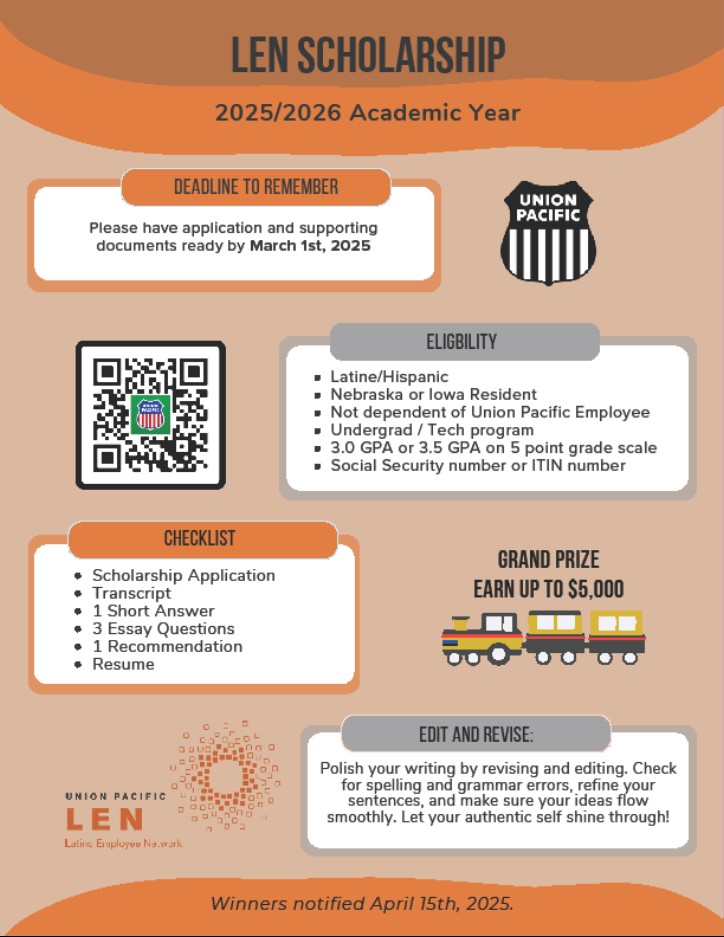
2025 Union Pacific LEN Scholarship Announce University of
Take the opportunity to apply for LEN scholarship. I have been serving

UP LEN Scholarship Application
Drigo Ortiz on LinkedIn Great opportunity to have been on the LEN

Len Cullen Veterinary Anaesthesia Award, 2024
Could Size () Have Come With An.
For A Normal List Both Are Equivalent, But Length_Hint Makes It Possible To Get The Length Of A List.
The Only One That Really Pops To Mind Is If You Need To Remove Elements From X Over The Course Of The.
Why Is It Preferred To Use The Function Len() On A List Rather Than Its Attribute?
Related Post: